What are you looking for?
Search

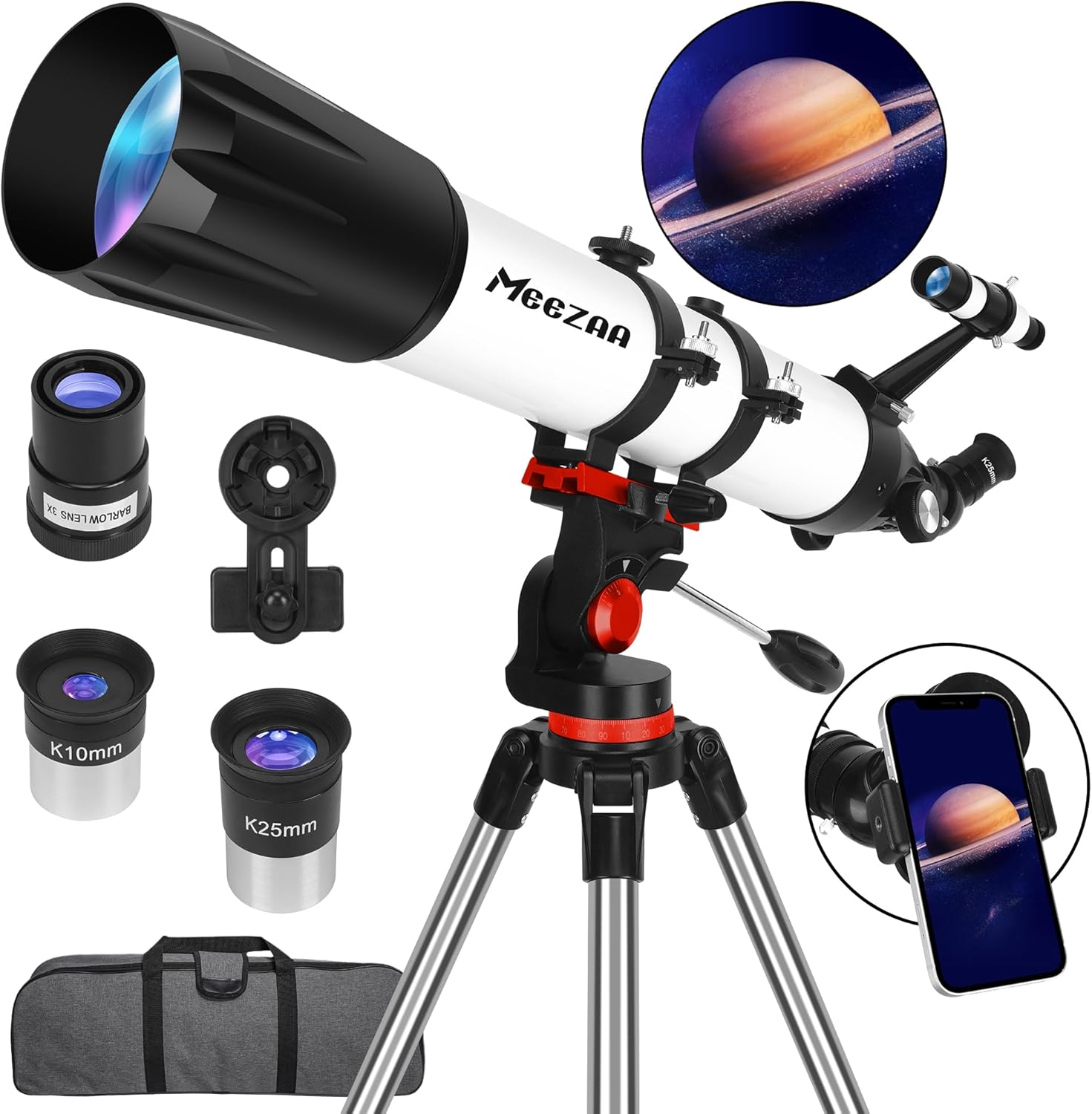
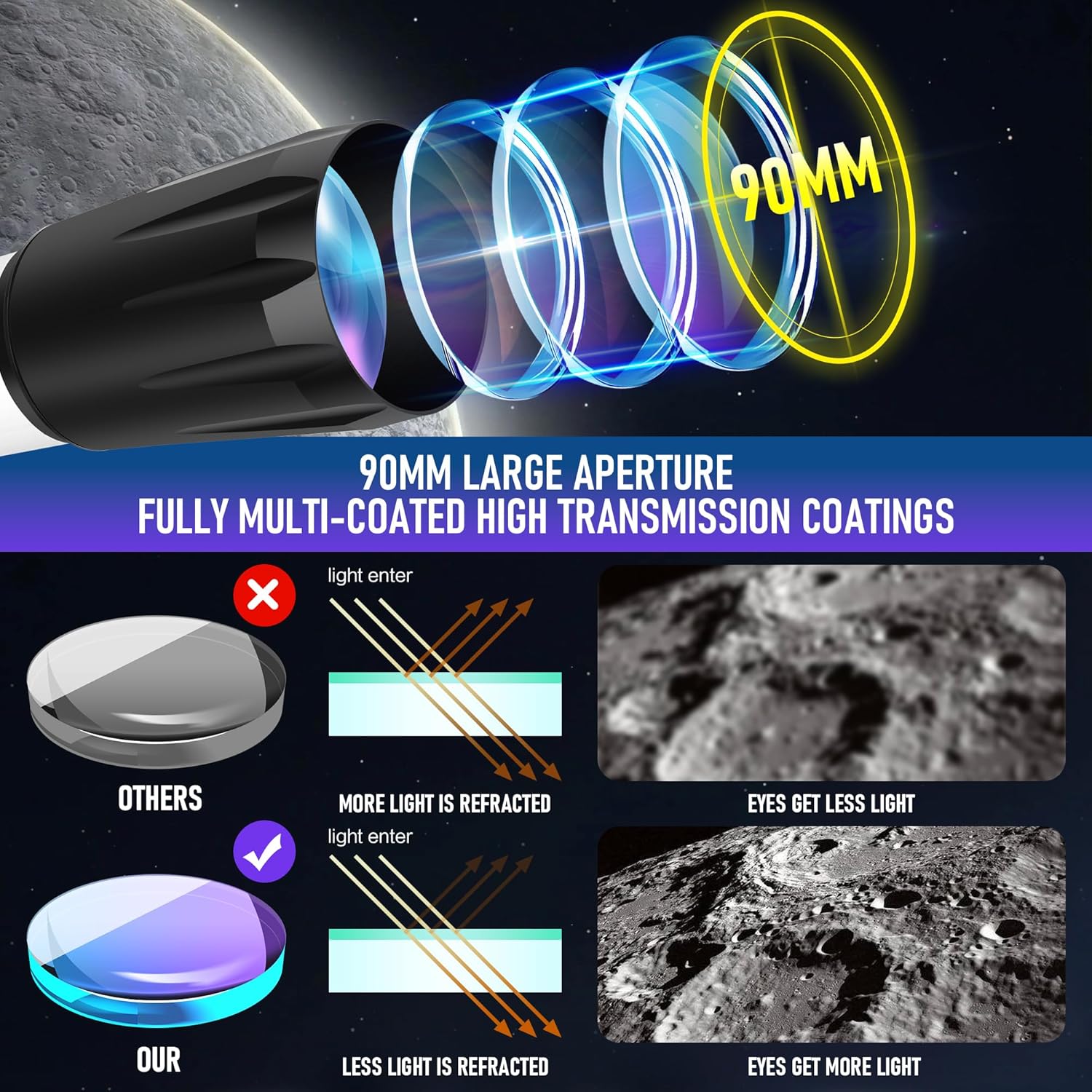
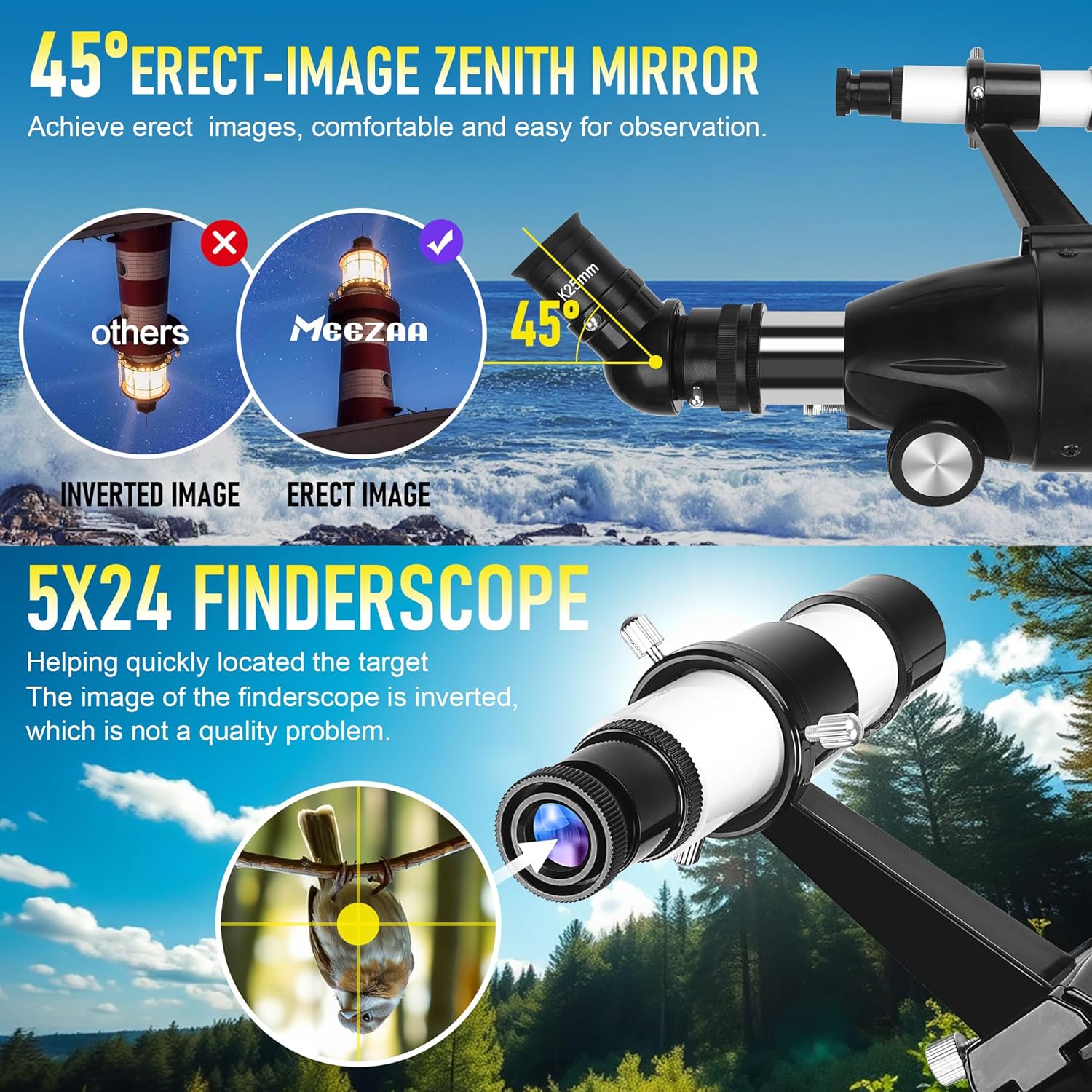
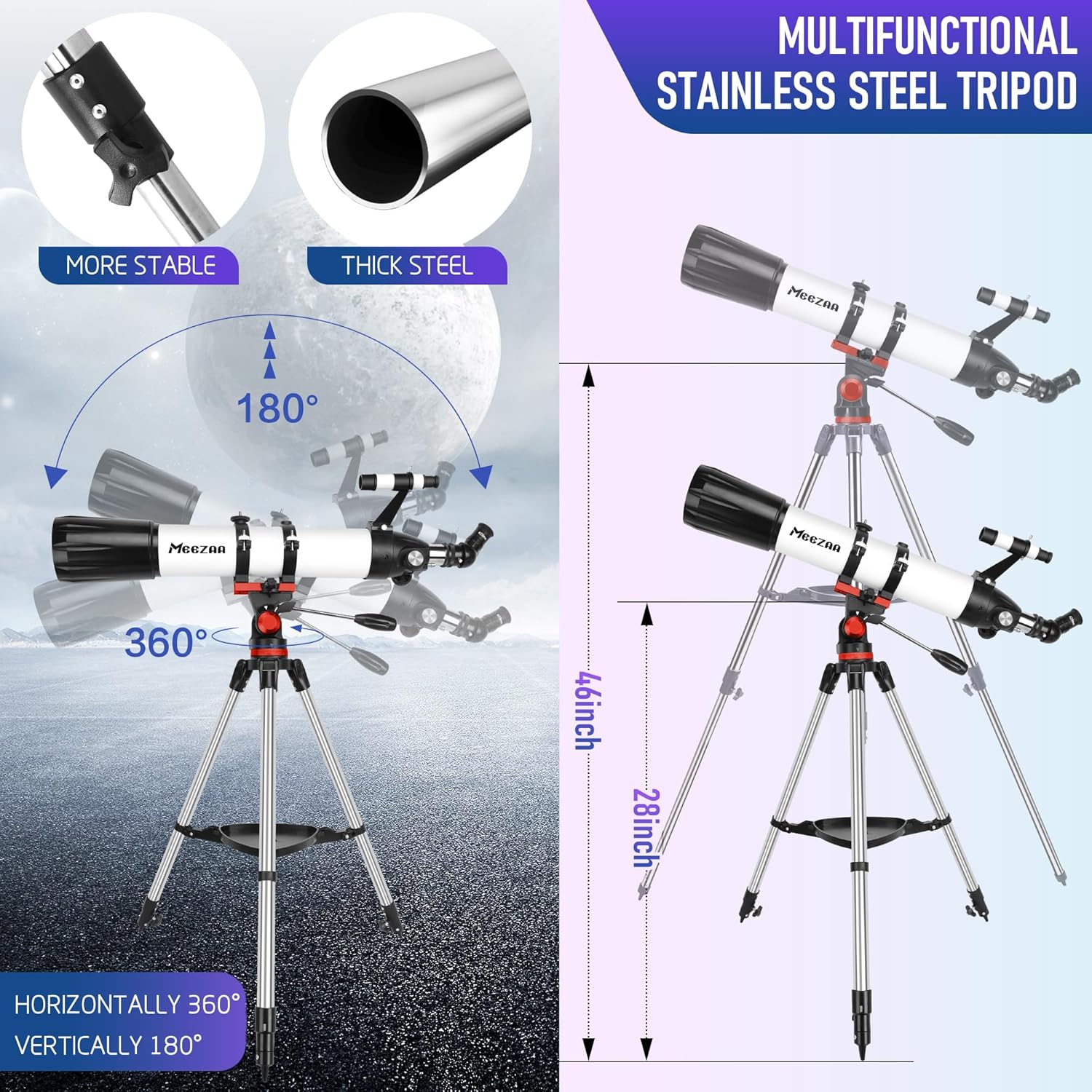
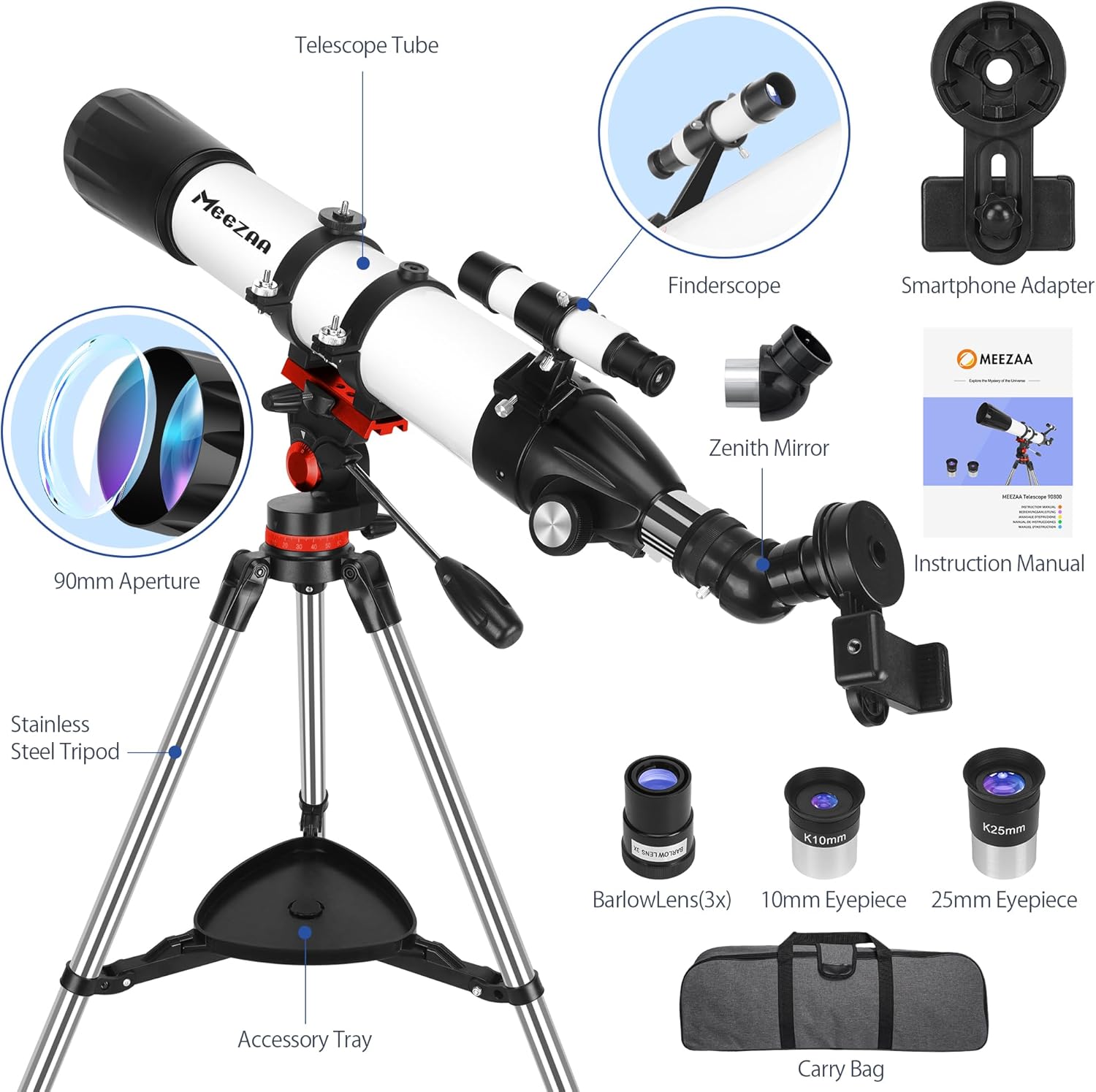
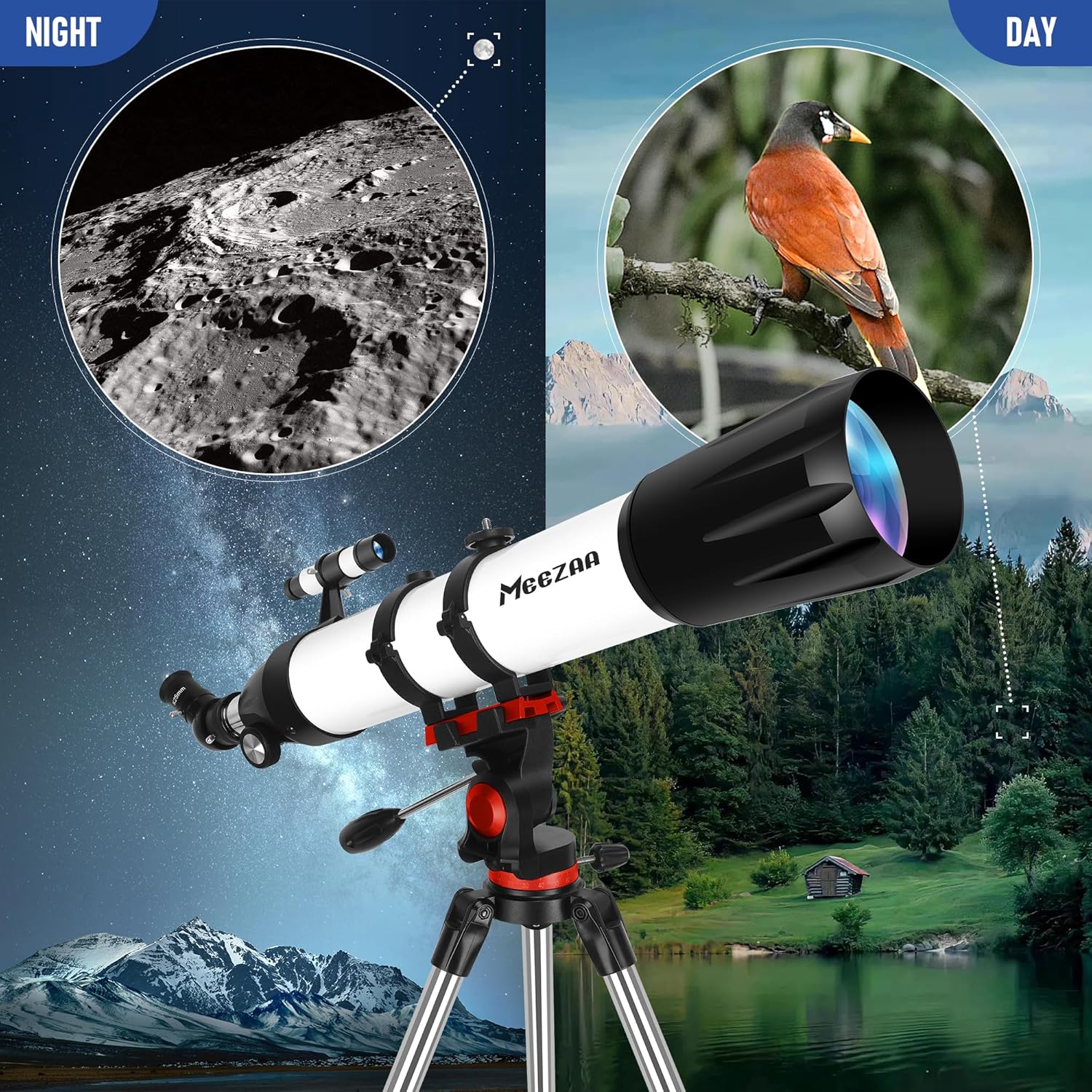
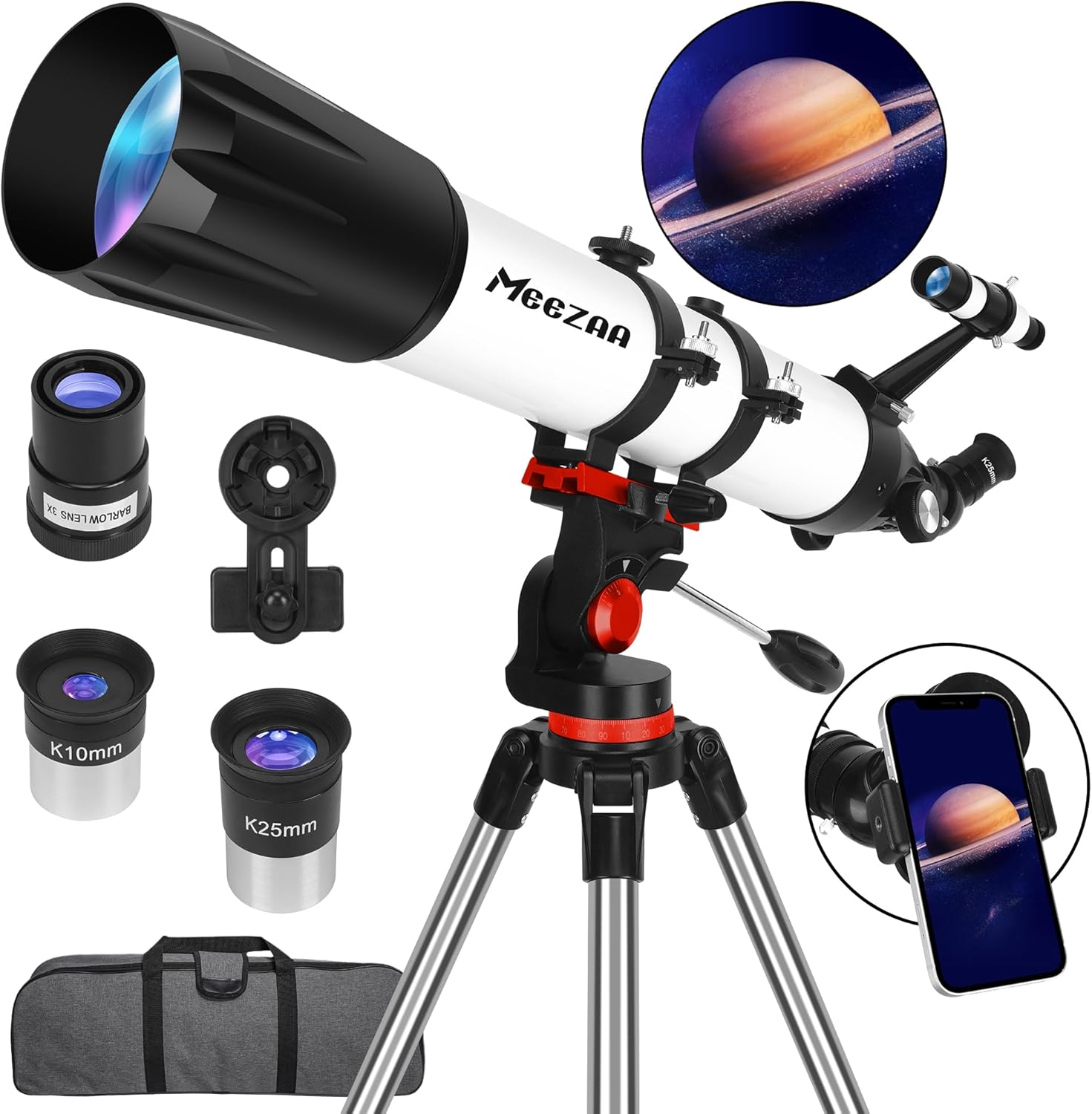
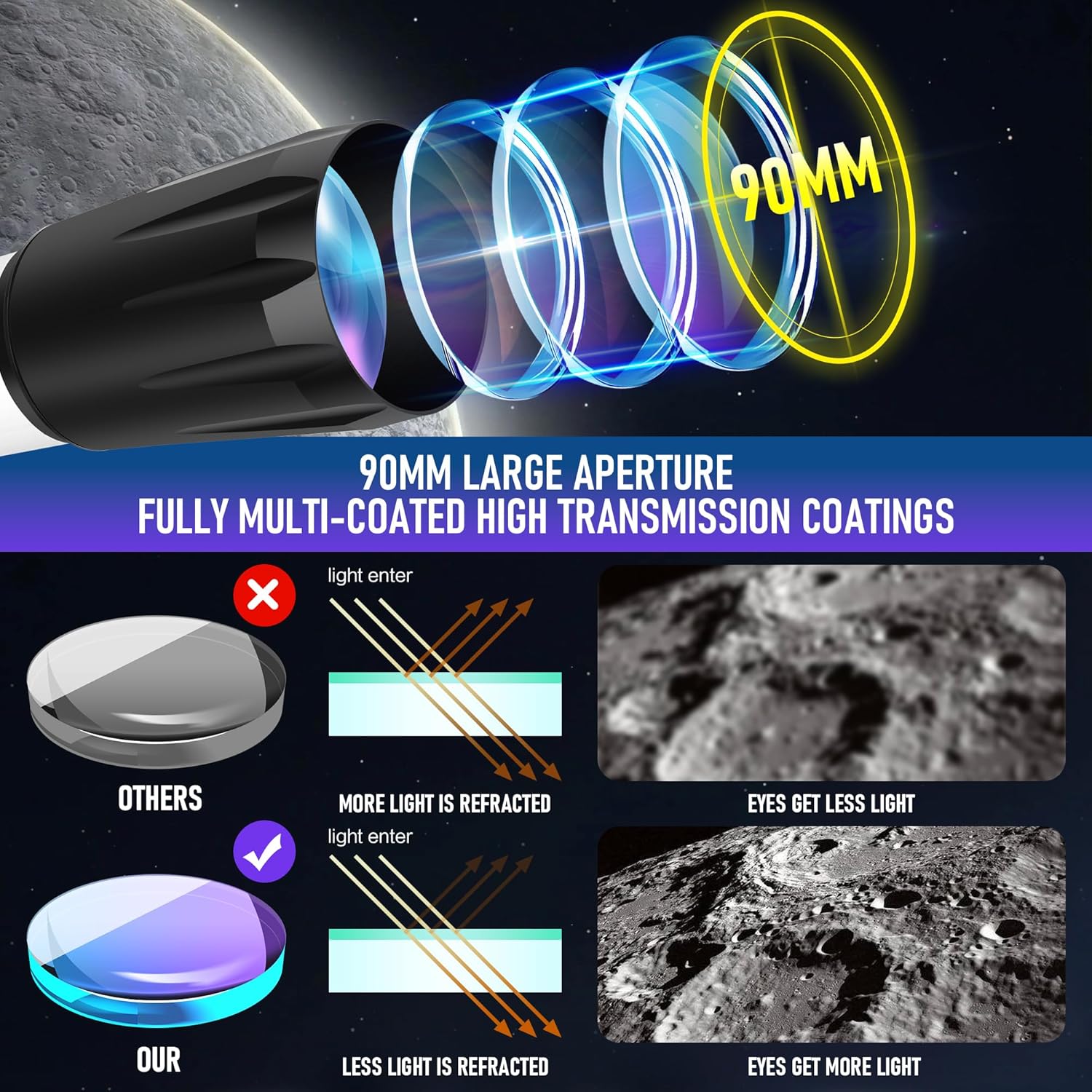
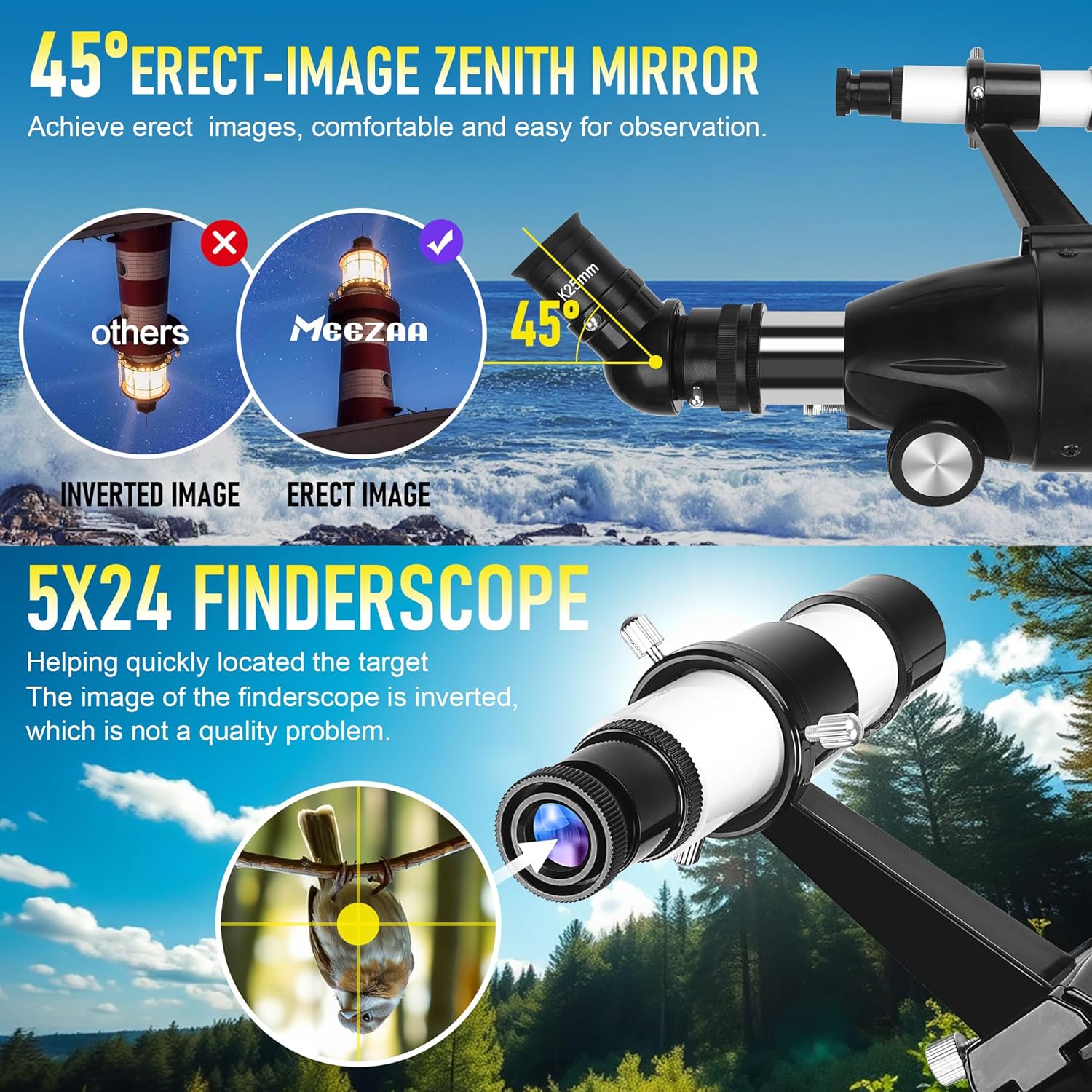
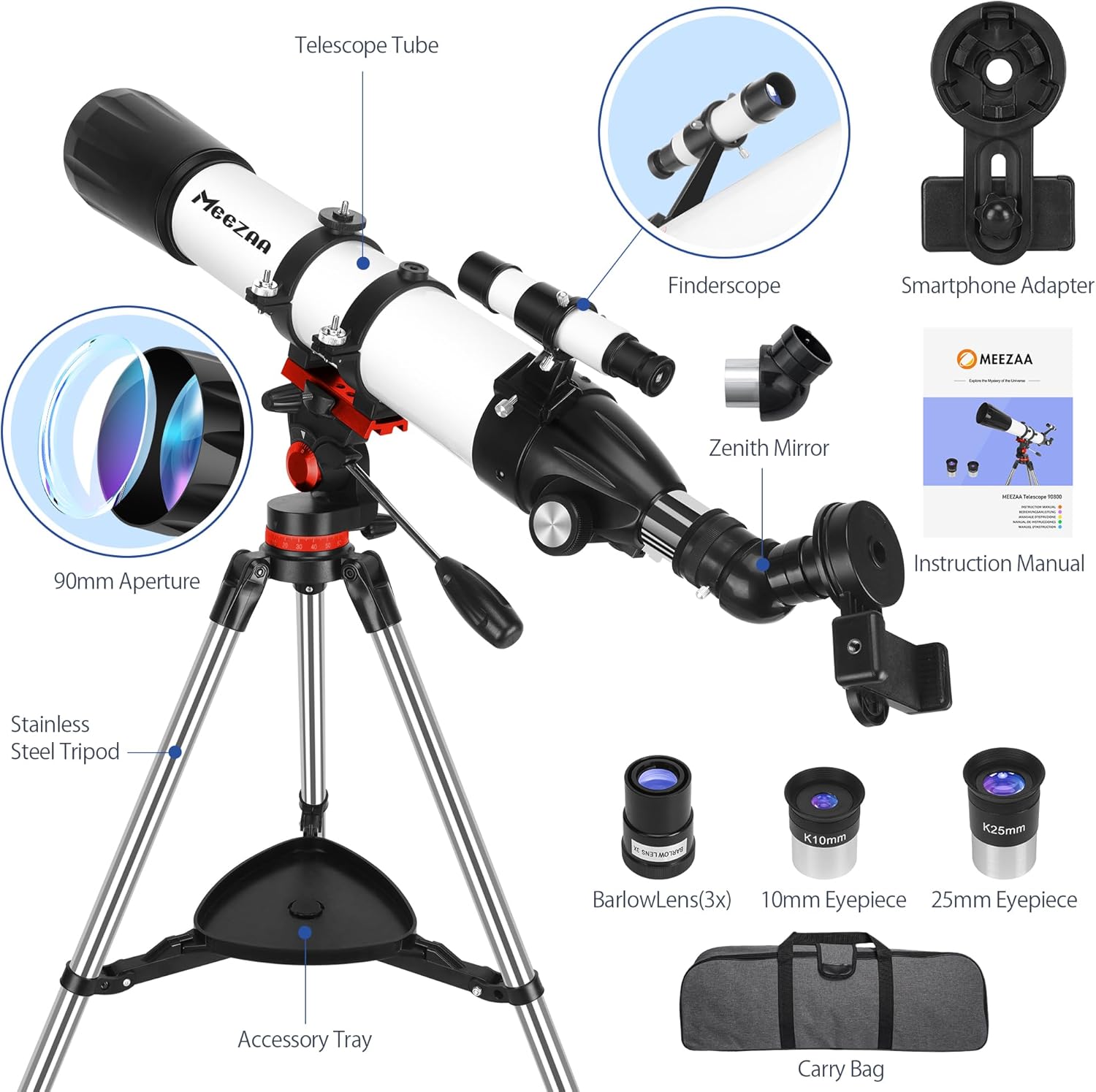
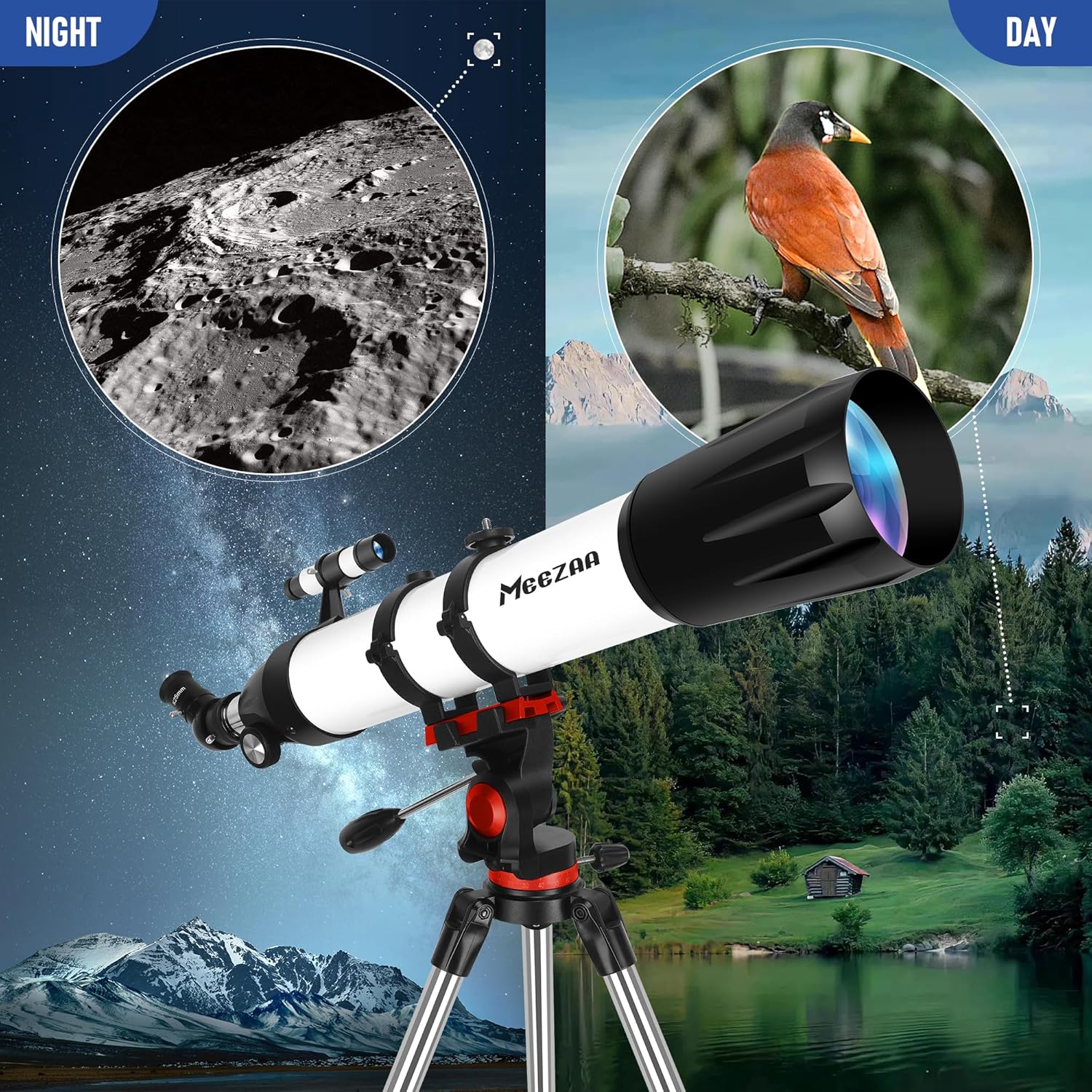

90mm Large Aperture: The astronomy telescope has an 800mm(f/8.88) focal length and 90mm aperture. The 90mm aperture captures more light pictures fully multi-coated optical glass lenses with high transmission coating improve image brightness and clarity
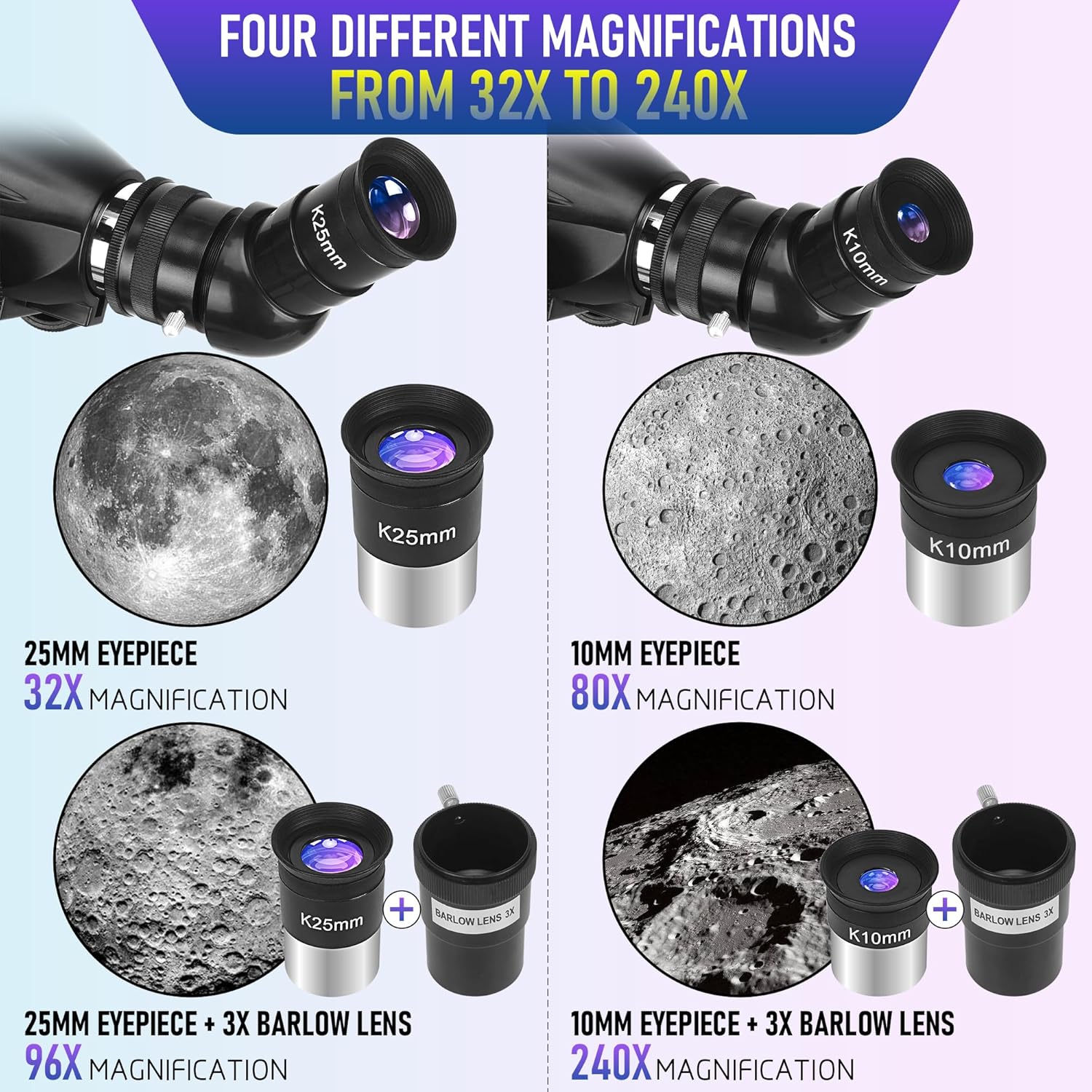
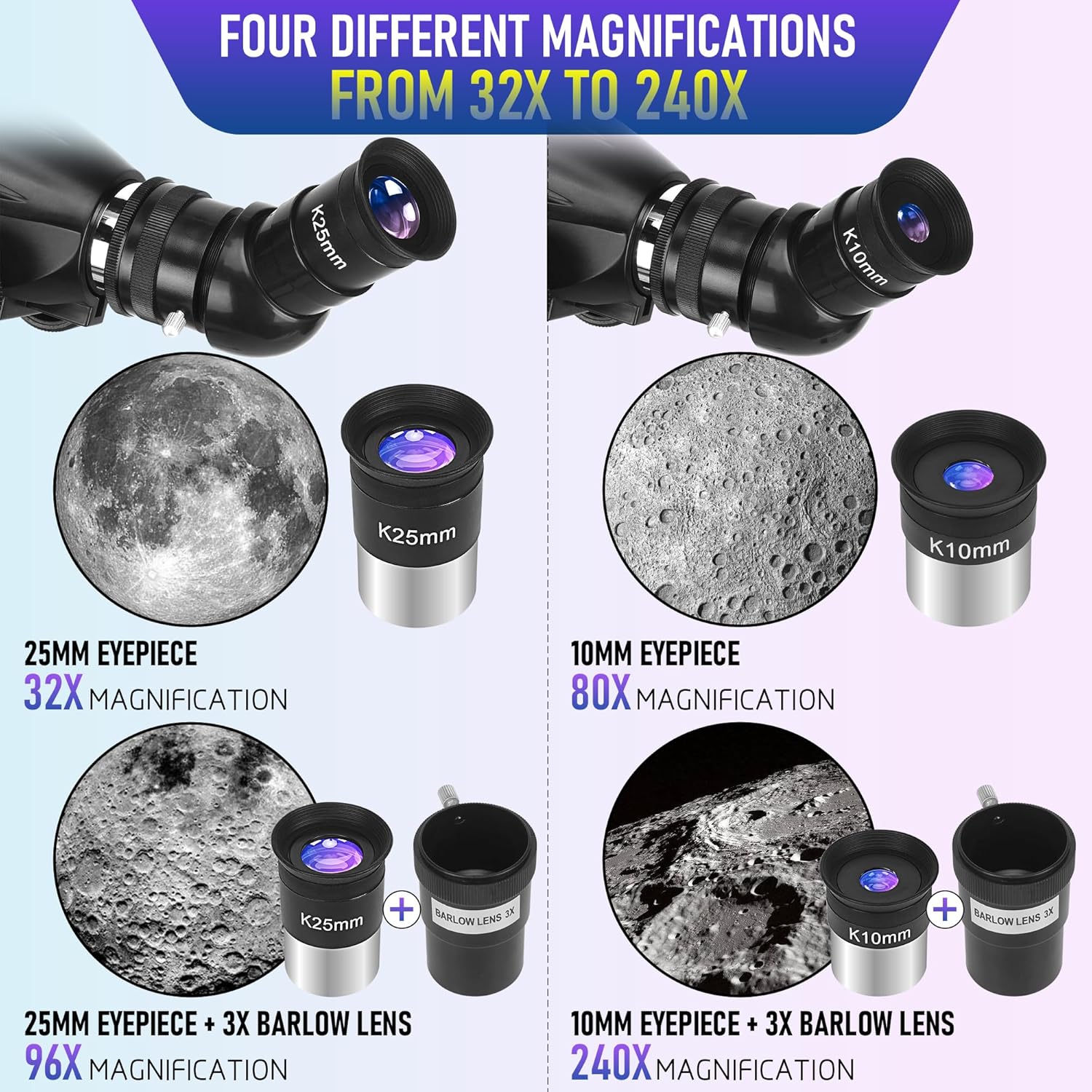
Optimum Magnification (32X-240X): Our telescope for adults high powered is equipped with two eyepieces(10 mm and 25 mm) and a 3X Barlow lens. The 3X Barlow lens triples the magnification of each eyepiece allowing us to observe unprecedented lunar details
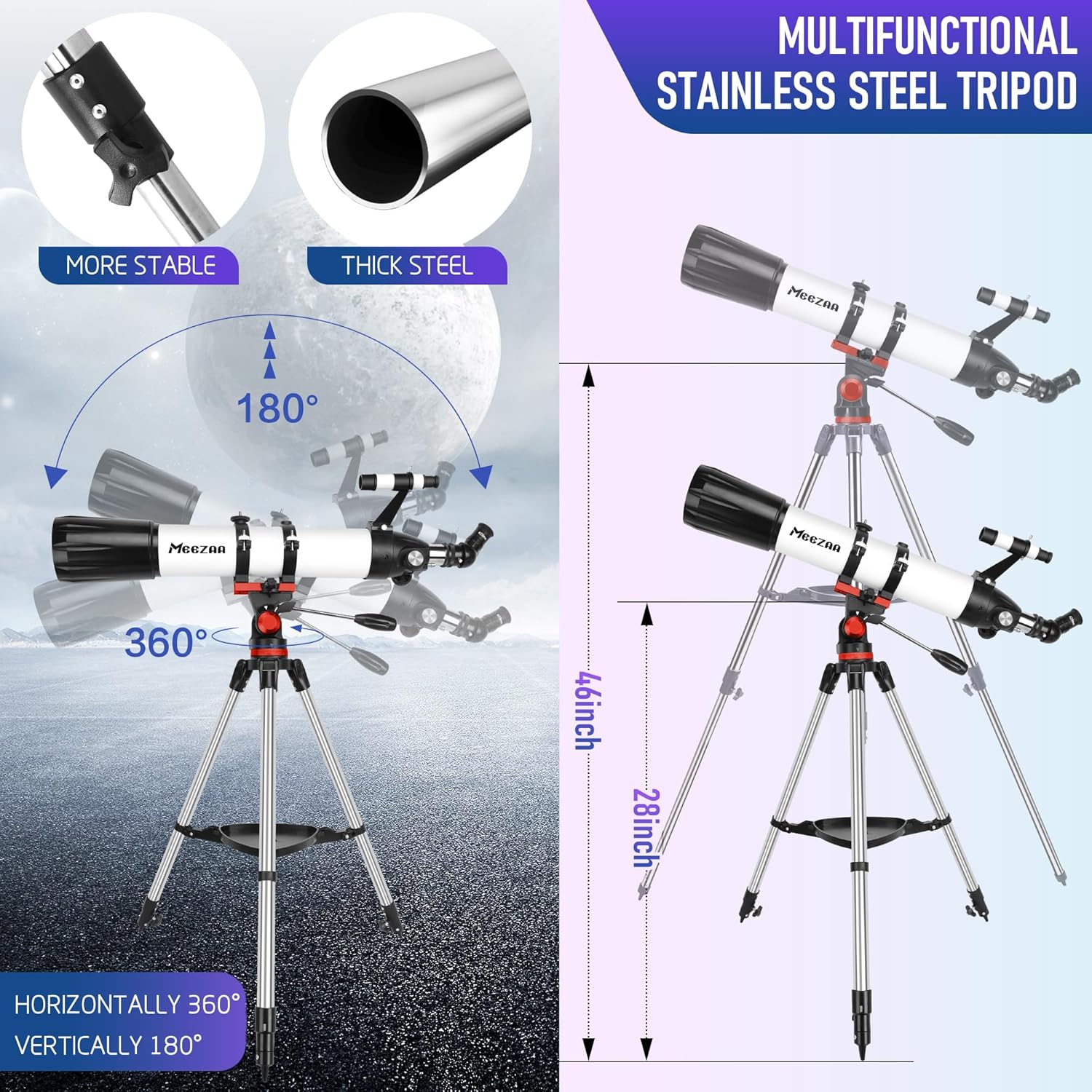
Convenient Accessories: Includes an adjustable stainless steel tripod (28 to 46 inches) for flexible viewing. All accessories fit neatly into the carry bag. Use the phone adapter to capture photos and videos sharing moments. Ideal for backyard astronomy camping nights and outdoor star parties
Quick Setup Big Discoveries: With a detailed paper manual 90% of users assemble in 10 minutes. telescopes are trusted by thousands for learning astronomy exploring nature and creating unforgettable moments under the stars
Clear skies: Nights with few or no clouds where stars are clearly visible.
Calm air: Little to no wind to prevent telescope shaking and reduce atmospheric turbulence.
Low humidity: Dry air improves clarity and reduces moisture interference in the view.
Minimal light pollution: Choose locations away from city lights to avoid light pollution.
Overall the weather that is most suitable for observing is a clear night sky a deep black night sky and fresh unpolluted air.
Yes with your telescope you can observe planets especially in calm air clear skies and low light pollution.
you can observe fascinating details on several planets:
1. Mars When it's near opposition you might spot its polar caps and dark surface features.
2. Jupiter You can see methane bands and sometimes the Great Red Spot.
3. Saturn Its stunning rings are a highlight and in good conditions you might even see the shadows on the rings.
For the best experience observe on clear dark nights away from city lights.
After adjusting the tripod height make sure all screws are tightened and place it on a flat level surface to ensure stability. Avoid touching the tripod while observing and use the fine-tuning handle to adjust the telescope's direction. In windy conditions avoid using the telescope as wind can cause instability and shaking.
1. Please make sure the lens cap is removed.
2. If you can't see anything at night try using the telescope during the day.
3. Check the eyepiece. You should see a white circle when looking through it. Wave your hand in front of the objective lens; the view should momentarily darken then brighten again.
If the image is still too dark after these steps the eyepiece might be damaged. Please get in touch with us for a replacement.
The video showcases the product in use.The video guides you through product setup.The video compares multiple products.The video shows the product being unpacked. Merchant VideoWhat weather is suitable for observing with a telescope?
Can I see planets with my telescope?
How to make the tripod more stable?
Why can I only see darkness through my telescope?
90800 Astronomical telescope

You have successfully commented, please wait for review
Copied Successfully
You can enjoy up to 1 free gift!